How to Build a Professional Nashville Overdub Rig for Guitarists
In the modern music industry, the “session” has moved from the hallowed halls of Music Row into the spare bedrooms and home studios of Nashville’s elite players. Today, being a professional guitarist means being your own recording engineer. Producers no longer just hire you for your fingers; they hire you for your ability to deliver a mix-ready, high-fidelity audio file from your own rig.
Building an overdub suite that meets Nashville standards requires more than just a laptop and a cable. It requires a signal chain that preserves the integrity of your tone and a workflow that allows for seamless remote collaboration. This guide will show you how to build a rig that earns the trust of the world’s most demanding producers.
The Modern Signal Chain: From Strings to Silicon
A professional remote rig is only as strong as its weakest link. In a town where “tone is king,” your audio interface and preamp selection are critical.
The Audio Interface: Your Digital Front Door
For a Nashville session player, your interface must offer high-headroom instrument inputs (Hi-Z) to capture the full dynamics of your pickups. In 2026, standards have shifted toward units with integrated DSP (Digital Signal Processing).
- The Pro Standard: The Universal Audio Apollo series remains a favorite because it allows you to track through emulations of legendary preamps like the Neve 1073 or Manley Voxbox with near-zero latency.
- The Guitar-Centric Choice: The IK Multimedia AXE I/O is specifically designed for guitarists, featuring adjustable impedance matching to make your digital signal feel like a physical amp.
The Hybrid Amp Solution
While miking a vintage tube amp is still the gold standard, the speed of modern sessions often requires a hybrid approach. Many pros use “Load Boxes” like the Universal Audio OX or the Two Notes Captor X. These allow you to run your real tube amp head at full volume while sending a perfectly cab-simulated signal directly into your interface. This ensures your neighbors stay happy while your tracks sound like they were cut at Ocean Way.
If you are just starting to build your gear list, check out our guide on essential guitar accessories for beginners to ensure your foundations—like high-quality cables—are solid.
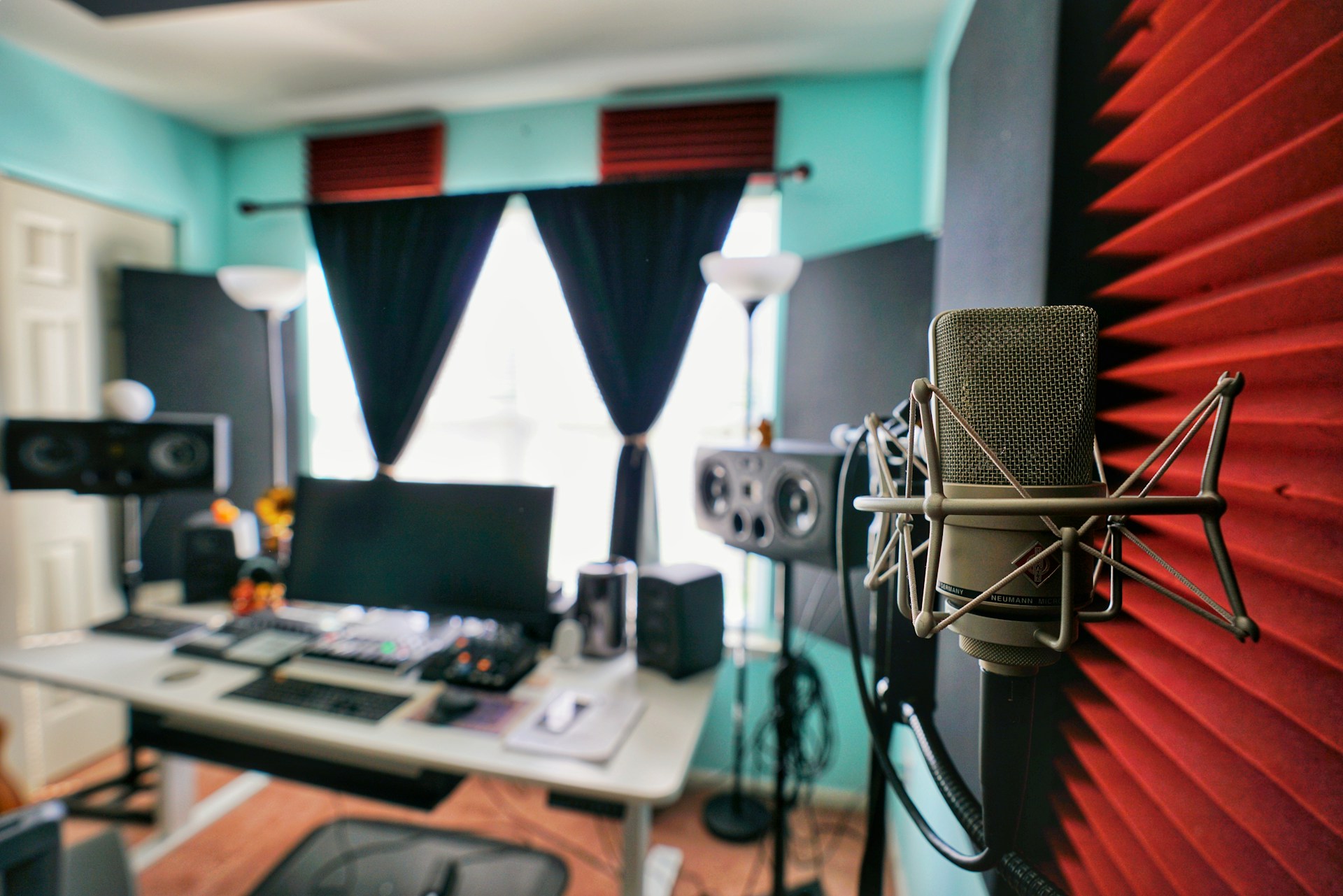
Room Treatment: The Silent Session Partner
One of the most common mistakes in home recording is neglecting the room. Even if you are recording “direct” (DI), any acoustic guitar work or “room mic” blending will be ruined by bad reflections.
Nashville producers can hear a “small room” immediately. To combat this, focus on:
- Acoustic Absorption: Use rockwool panels or thick moving blankets to kill “flutter echo”—that metallic ringing sound when you clap your hands.
- Diffusion: Breaking up flat surfaces prevents standing waves that make your acoustic guitar sound “boomy” or “boxy.”
- The “Closet” Trick: If you are on a budget, tracking acoustic parts in a walk-in closet full of clothes provides a naturally dead environment that is perfect for dry, professional overdubs.
Learning how to record a song from demo to finished track will help you understand where your guitar fits into the overall frequency spectrum of a professional mix.
Mastering the Remote Workflow
Being a professional remote player means making the producer’s life easy. Your file management and communication are just as important as your soloing.
Delivering “The Goods”
When you finish a session, you should typically provide:
- The Processed Track: Your guitar with all effects and “vibe” baked in.
- The DI (Direct Input) Track: A clean, unprocessed version of your performance. This allows the producer to “re-amp” your part later if the mix changes.
- The “Dry” Track: If you used heavy delay or reverb, provide a version without them so the mixer can control the space.
Remote Collaboration Tools
In 2026, “mailing in” tracks is often replaced by real-time remote sessions. Tools like Sessionwire or Source-Connect allow a producer in another city to hear your high-quality DAW output in real-time while watching you on video. This mimics the “behind the glass” experience of a traditional studio.
This real-time feedback is where your etiquette skills truly shine. Refer back to our Roadmap to Professionalism to ensure you are handling these digital sessions with the same grace as an in-person date.
Suggested Listening: Masterful Remote Productions
Many of the biggest hits of the last five years were tracked in home overdub suites. Listen to these tracks to hear the “studio-quality” results achievable at home:
- “The Bones” by Maren Morris: Listen to the layered, textured guitar parts that define the modern Nashville pop-country sound.
- “Bluebird” by Miranda Lambert: A masterclass in how acoustic and electric layers can coexist in a “busy” but clean arrangement.
- Tom Bukovac’s “Home Sketches”: Tom is the king of the “home overdub,” and his YouTube channel provides a literal roadmap of how he tracks world-class parts from his basement.
Conclusion
Building a professional overdub suite is an investment in your career’s longevity. By focusing on a high-quality signal chain, treating your room, and mastering the art of file delivery, you move from being “a guy who plays guitar” to a “professional session resource.”
Ready to level up your recording skills?
Technical gear is only half the battle; you still need the hands to play the parts. At Green Hills Guitar Studio, we don’t just teach chords—we teach you how to learn to play what you like to hear!
![How to Find the Best Guitar Instructor [Parents & Adult Learners] | Green Hills Guitar Studio](https://greenhillsguitarstudio.com/wp-content/uploads/2026/02/How-to-Find-the-Best-Guitar-Instructor-Parents-Adult-Learners-768x512.jpg)