The Nashville Session Guitarist’s Roadmap to Professionalism
Nashville is often called a ten year town. For guitarists, that decade is spent honing a very specific set of skills that go far beyond playing fast scales or owning expensive vintage instruments. To make it as a professional session guitarist in Music City, you must master the delicate balance of technical precision, sonic versatility, and the social grace known locally as the hang.
Whether you are dreaming of playing on a stadium stage at Nissan Stadium or tracking guitars in a world-class studio on Music Row, your journey requires a roadmap. This guide breaks down the essential pillars of the Nashville guitar style and the professional standards required to thrive in the world’s most competitive music market.
Mastering the Nashville Guitar Style
The Nashville guitar style is defined by one word: economy. While Los Angeles session players might be known for their technical fusion and New York players for their jazz sensibilities, Nashville pros are masters of the song.
Professionalism in this town means playing exactly what the track needs and nothing more. This often involves clean, articulate hybrid picking, tasteful volume swells, and a deep understanding of the pocket. You are not just a guitar player; you are an architect building a foundation for the lyric and the melody.
To understand the melodic intent behind the playing, it is vital to see how songwriters construct their work. Many pros find that understanding how Nashville songwriters build around the hook helps them choose the right parts for a session.
The Essential Language: The Nashville Number System
If you walk into a tracking session at a major studio and ask for a chord sheet in G major, you might receive some puzzled looks. In Nashville, we speak in numbers.
The Nashville Number System (NNS) is a shorthand method of transcribing music by using numbers instead of letter names for chords. This allows a band to change the key of a song instantly without rewriting the entire chart. If a singer decides a song is too high, the band simply shifts the tonic of the numbers rather than scrambling to transpose chords on the fly.
Learning this system is the single most important technical hurdle for any aspiring pro. If you cannot read a number chart at a glance, you cannot work as a session player here. For a deep dive into this essential skill, see our guide on demystifying the Nashville Number System.
Gear and Tone: Navigating the Sonic Landscape
In many cities, having one signature sound is a benefit. In Nashville, versatility is your currency. A professional session guitarist is expected to arrive with a palette of tones that can fit anything from a 90s country throwback to bluegrass to a modern pop-country crossover.
The Holy Trinity of Guitars
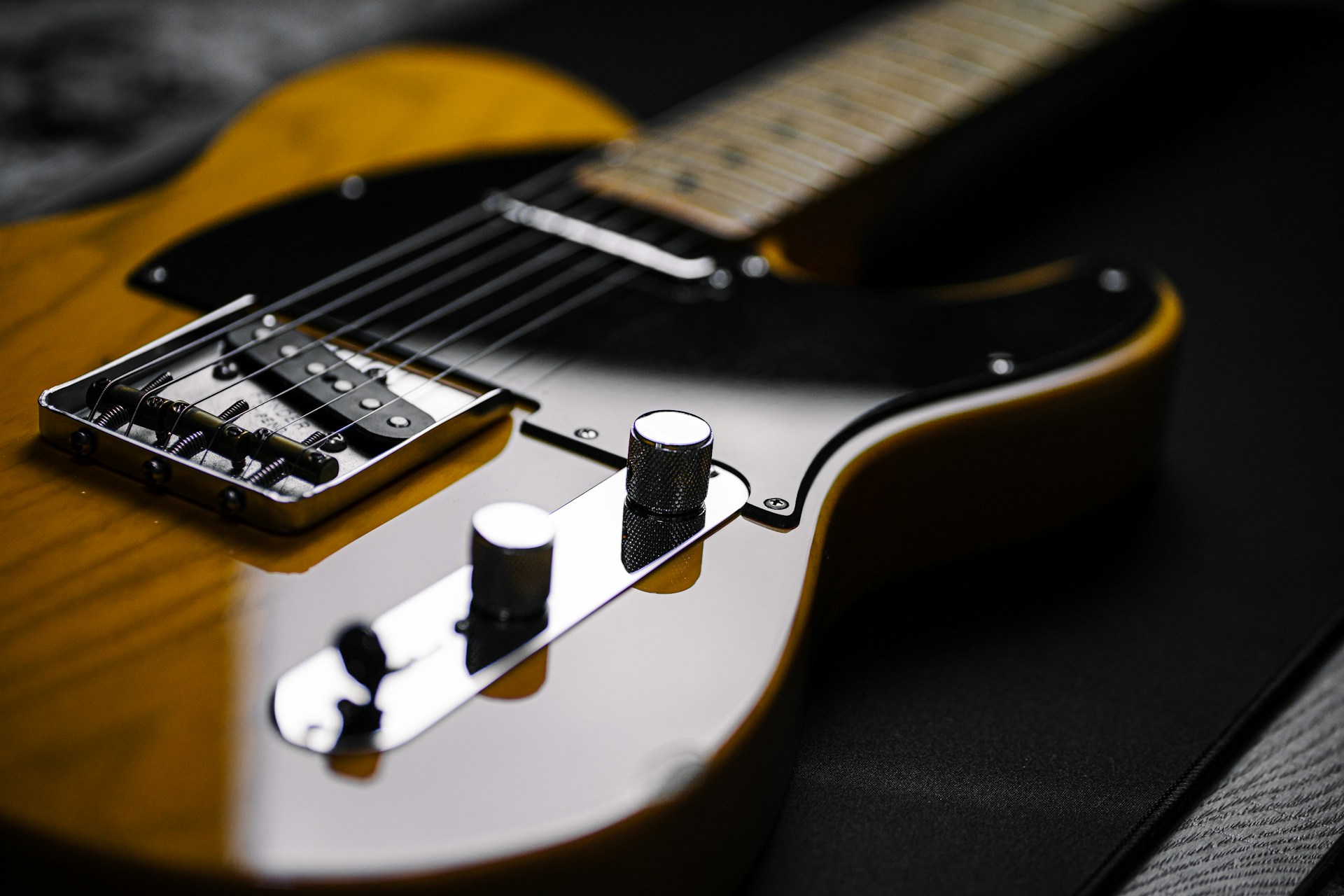
Most pros rely on a Telecaster for its “twang” and clarity, a Stratocaster for soul and blues textures, and a Gibson-style humbucker guitar for thick, rock-oriented tracks. Additionally, a high-quality acoustic guitar is non-negotiable for doubling parts.
The Pedalboard
Your signal chain is your secondary instrument. You must be able to dial in transparent overdrives, lush delays, and perfectly timed tremolo. Knowing how to use these tools without cluttering the frequency range of the vocal is a high-level skill. You can learn more about building your rig by navigating the world of guitar effects pedals.
Professional Etiquette and “The Hang”
In Nashville, your reputation is built on how you behave during the twenty minutes between songs as much as how you play during the three minutes of the track. This is “the hang.” Producers and artists want to work with people who are prepared, punctual, and pleasant to be around.
Being a pro means being “low maintenance.” This includes:
- Showing up fifteen minutes early to every session or rehearsal.
- Having your gear in perfect working order with no buzzing or signal loss.
- Knowing when to stay silent and let the producer or songwriter lead.
- Understanding the basic guide to live show etiquette to ensure you are invited back for the next gig.
Collaboration and the Songwriting Connection
The guitarists who get the most work in Nashville are often those who understand the industry from the inside out. This city is built on songwriting, and the lines between player, writer, and producer are often blurred.
Many guitarists find that participating in co-writes improves their ability to write “parts” for sessions. When you understand why a bridge needs more tension or why a chorus needs a specific rhythmic lift, you become more valuable to the artist. Explore why co-writing is the secret sauce in Nashville to see how this collaborative spirit fuels the local economy.
Suggested Listening: The Nashville Giants
To truly learn the “Nashville Sound,” you must listen to the players who defined it. These musicians represent the pinnacle of session work, combining technical mastery with impeccable taste.
- Grady Martin: The architect of the “Nashville Sound” in the 50s and 60s. Listen to his work on “El Paso” or “Pretty Woman.”
- Brent Mason: Arguably the most recorded guitarist in history. Check out his work on Alan Jackson or Brooks & Dunn tracks for a masterclass in hybrid picking.
- Dann Huff: The king of the modern country-rock session sound. He redefined the use of effects and high-gain tones in the 90s and 2000s.
- Tom Bukovac: A modern legend known for his “Session Man” philosophy and incredible ear for the perfect part.
- Derek Wells: A current powerhouse on the charts who shows how to blend classic Nashville sensibilities with contemporary pop textures.
High-Value Techniques for the Modern Session Player
To survive a four-hour tracking session, you need more than just good timing. You need a specialized technical vocabulary that allows you to “speak” the language of a hit record. Nashville producers often use specific shorthand for these techniques, so having them under your belt is non-negotiable.
Hybrid Picking and Chicken Pickin’
As mentioned, the blend of a flatpick and fingers is the secret to the snap and pop heard on country radio. Mastering this allows you to play rapid-fire arpeggios and “double stops” (two notes played at once) with a percussive clarity that standard alternate picking cannot achieve.
Diamond and Whole-Note Voicings
In a session, you are often asked to play “diamonds.” This is Nashville slang for letting a chord ring out for the full duration of a measure (usually a whole note). The skill here isn’t just hitting the chord; it’s about your voice leading and how the notes of one chord melt into the next. To master this, you should practice how to use inversions for better voice leading.
The Art of the “Volume Swell”
A pro guitarist is often expected to fill the space of a steel guitar or a pad. By using your guitar’s volume knob or a dedicated volume pedal, you can “fade in” chords to remove the attack of the pick. This creates an ambient, violin-like texture that is a staple of Nashville ballads.
Double Tracking and Precision
In the studio, you will frequently be asked to “double” your part—playing the exact same thing twice to create a wide stereo sound. This requires extreme rhythmic discipline. If your two takes aren’t perfectly synchronized, the track will sound “blurry.” You can sharpen this skill by practicing exercises for synchronizing both hands.
Final Thoughts
Becoming a professional guitarist in Nashville is a marathon, not a sprint. It requires a relentless commitment to your craft, a willingness to learn a new musical language, and the humility to serve the song above your own ego. By mastering the Nashville Number System, investing in versatile gear, and maintaining a professional attitude, you can find your place in the vibrant tapestry of Music City.
Ready to take your playing to the professional level?
At Green Hills Guitar Studio, we specialize in preparing musicians for the real-world demands of the Nashville music industry. Whether you need to master the Nashville Number System or refine your session techniques, our expert instructors are here to help.
![How to Find the Best Guitar Instructor [Parents & Adult Learners] | Green Hills Guitar Studio](https://greenhillsguitarstudio.com/wp-content/uploads/2026/02/How-to-Find-the-Best-Guitar-Instructor-Parents-Adult-Learners-768x512.jpg)