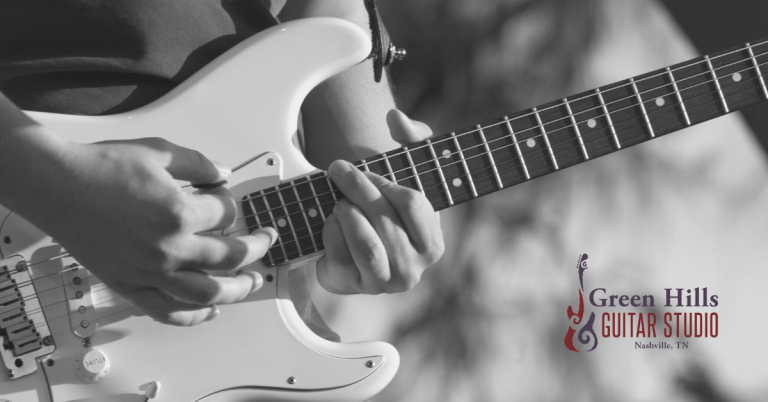

Guitar Picking Techniques: A Guide to Control, Tone, and Speed
Developing strong picking technique is one of the most important parts of becoming a confident guitarist. Your right hand controls articulation, time feel, tone, and clarity. When your picking is solid, everything you play becomes cleaner and more expressive. When it is inconsistent or tense, even simple lines can feel difficult.
This guide explains the core guitar picking techniques, why each one matters, and how they work together to help you play with more freedom. You will also find practice tips, musical applications, and a lesson video on tremolo picking.
Why Learning Multiple Picking Techniques Matters
Many players rely on only one picking approach, usually alternate picking. While that can take you far, learning several techniques gives you more control over your sound and allows you to choose the most efficient movement for the musical situation.
Different techniques help you:
- Reduce tension and unnecessary motion
- Play faster and more accurately
- Navigate string crossings with more stability
- Shape phrases with different articulations
- Access musical ideas that would be difficult with only one approach
Good picking technique is not about speed for its own sake. It is about improving your control so you can play what you hear, keep time more reliably, and create the tone that serves the music.
1. Alternate Picking
Alternate picking uses a consistent down-up motion for every note. It builds timing, clarity, and even articulation.
How to practice it
- Keep the motion small and relaxed
- Focus on tone before speed
- Work on two-string transitions to improve string crossing
- Use scale fragments, simple melodies, and short phrases
Alternate picking is reliable, versatile, and essential for almost every style. Check out our YouTube playlist about developing your guitar skills through picking exercises.
We also offer a free Guitar Skills course in our store. It includes tabs, videos, and different exercises to develop finger strength, independence, and dexterity.
Alternate Picking Lesson Video:
2. Economy Picking (or cross picking)
Economy picking combines alternate picking with small directional sweeps. When moving from one string to the next, the pick continues naturally in the direction it is already going.
Why it matters
Economy picking reduces motion and helps you play fast lines with less effort. It works well for scale runs and melodic passages that move in one direction.
How to practice it
- Use three-note-per-string scale shapes
- Keep the motion smooth and continuous
- Listen for even attack across all strings
This technique is a useful complement to alternate picking because it trades a little attack consistency for efficiency and flow.
3.Legato Technique
Legato playing focuses on smooth, connected notes created through hammer-ons, pull-offs, and slides. Instead of picking every note, you rely on the fretting hand to articulate most of the line. This creates a flowing, vocal quality that works well in rock, metal, jazz, and fusion.
Why it matters
Legato adds variety to your phrasing and helps you play faster, more fluid lines without relying on constant picking. It reduces the physical effort in your picking hand and gives you another way to shape your sound. When used intentionally, legato can create contrast, dynamics, and expressive phrasing.
How to practice it
- Start with simple hammer-on and pull-off patterns
- Focus on even volume between picked and slurred notes
- Use slow tempos to develop clean, controlled movements
- Pay attention to timing and synchronization between both hands
- Add slides to connect phrases and reduce mechanical tension
The most common challenge is sloppy articulation or uneven volume. Clean legato requires a strong fretting-hand motion and clear coordination with your picking hand. Even though you are picking fewer notes, both hands still need to work together.
Playing Legato Lesson Video
4. Hybrid Picking
Hybrid picking blends the pick with your free picking-hand fingers. It gives you access to larger string skips, wider intervals, and a more nuanced tone.
Why it matters
Hybrid picking offers more tonal range and allows you to play ideas that are not practical with a pick alone. It is used in country, jazz, pop, rock, and modern fingerstyle-inspired playing.
How to practice it
- Pick a note on one string, then pluck the next note with your middle or ring finger
- Practice chord fragments that mix pick and fingers
- Use it as a problem-solving tool rather than a style you must master
The technique excels when used selectively and musically.
5. Tremolo Picking
Tremolo picking is rapid alternate picking on a single note. It develops speed, endurance, accuracy, and control in your right hand.
Why it matters
Tremolo work exposes all inefficiencies in your technique. If your motion is tense, tremolo will highlight that. If the motion is relaxed and efficient, the tone becomes consistent and the technique becomes reliable at higher tempos.
How to practice it
- Use very small, loose movements
- Start slow and listen for even attack
- Increase speed only when the motion stays relaxed
- Practice string crossings and short phrases to apply the technique musically
Tremolo picking is valuable for rock, metal, bluegrass, surf, and any style that requires fast, articulate right-hand work.
Tremolo Picking Lesson Video
6. Flatpicking
Flatpicking uses a single pick to articulate melodies, scales, arpeggios, and rhythm parts. It is essential for bluegrass, fiddletunes, country, folk, and acoustic-driven styles, but it also provides a valuable foundation for any guitarist seeking strong rhythmic clarity and consistent attack.
Why it matters
Flatpicking strengthens time feel, articulation, and right-hand accuracy. Because acoustic guitars respond directly to pick dynamics, the technique helps you develop a clear sense of touch. It also trains you to control tone through pick angle, grip, and attack. Many players find that time spent flatpicking improves their electric playing as well.
How to practice it
- Use alternate picking on open-string patterns and simple scales
- Pay attention to tone variation created by pick angle and grip
- Practice crosspicking patterns to improve string accuracy
- Mix single-note lines with strummed chords to build coordination
- Keep the hand relaxed and let the pick glide across the strings
Flatpicking becomes most musical when you combine good mechanics with strong rhythmic awareness. Focus on clarity and control instead of speed.
Flatpicking Lesson Video
7. Fingerstyle Picking
Fingerstyle guitar playing uses the picking-hand fingers to articulate notes instead of a flat pick. This technique opens up a wide range of textures, independence between strings, and rhythmic patterns that are not possible with a pick alone.
Why it matters
Fingerstyle gives you full control over tone, volume, and articulation. Each finger can shape the sound differently, which creates a richer palette for chord melody, arpeggios, and independent bass lines. It is essential for classical, folk, and modern fingerstyle, but it also adds depth to jazz, pop, and singer-songwriter styles.
How to practice it
- Start with simple patterns using thumb, index, and middle finger
- Keep the hand relaxed and maintain curved, natural finger motion
- Practice steady thumb patterns to build bass-line independence
- Use arpeggios to develop coordination across strings
- Work slowly to build even tone and balance between fingers
Fingerstyle becomes most expressive when your hand feels comfortable and you can control each finger independently. Focus on tone, consistency, and rhythmic feel.
Fingerstyle Guitar Lesson
How These Techniques Work Together
You do not need to master all of these techniques at once. Most players benefit from alternating between them based on the musical situation. The real goal is to develop a right hand that is:
- relaxed
- efficient
- consistent
- rhythmically stable
- adaptable to different phrases and tones
When you have access to multiple techniques, you can choose the motion that makes the most musical sense.
Ready to Improve Your Guitar Technique?
If you want guidance, personalized feedback, and a clear path to better technique, working with a skilled instructor can make all the difference. Green Hills Guitar Studio offers guitar lessons in Nashville and online. Our teachers help you develop clean mechanics, better tone, and a deeper musical understanding, all at a pace that fits your goals.
![How to Find the Best Guitar Instructor [Parents & Adult Learners] | Green Hills Guitar Studio](https://greenhillsguitarstudio.com/wp-content/uploads/2026/02/How-to-Find-the-Best-Guitar-Instructor-Parents-Adult-Learners-768x512.jpg)