Dominant 7 Chords
Guitar Course
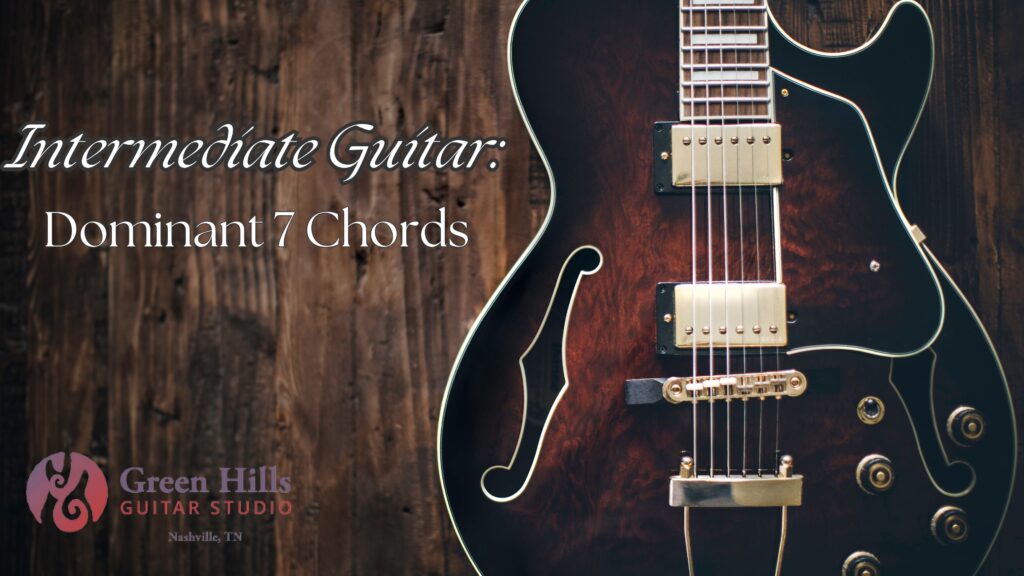
Learn dominant 7 chord shapes, 1-4-5 progressions, 12-bar blues form, and practical fretboard movement in five keys.
Dominant 7 chords are everywhere in guitar music.
You hear them in blues, rock, jazz, country, soul, R&B, funk, gospel, and countless rhythm guitar parts. They create tension, movement, grit, release, and that unmistakable sound that makes a progression feel like it wants to go somewhere.
Dominant 7 Chords is a focused intermediate guitar course that helps you understand these chords on the neck instead of memorizing disconnected shapes. You’ll learn practical dominant 7 voicings, 1-4-5 chord relationships, 12-bar blues form, straight and swung rhythm, and how to move through the same chord family in five different keys.
This course gives you a stronger foundation for rhythm guitar, fretboard fluency, blues playing, and lead guitar that actually connects to the chords.
Understand the Chords Behind the Sound
A lot of guitar players learn dominant 7 chords as shapes.
You learn an A7, a D7, maybe an E7, and then a few barre chord versions. But if you do not understand where those chords come from, how they relate to each other, or how they move through a progression, the fretboard can still feel like a guessing game.
This course is built to make that clearer.
You’ll learn how dominant 7 chords function inside 1-4-5 progressions and the 12-bar blues. You’ll practice locating important chord roots on the 6th and 5th strings. You’ll work through multiple keys so the same ideas become easier to recognize across the neck.
The goal is not just to know a few more chords. The goal is to understand how dominant 7 chords help organize rhythm guitar, blues progressions, and lead playing.
What You’ll Learn in This Course
This course teaches dominant 7 chords as a practical fretboard and rhythm guitar system. You’ll work through chord shapes, 1-4-5 relationships, 12-bar blues form, and rhythm approaches that help you hear and feel how these chords function in real music.
Dominant 7 Chord Shapes
Learn useful dominant 7 chord voicings and how to apply them in different places on the neck.
1-4-5 Chord Relationships
Understand how I, IV, and V chords work together in blues, rock, country, gospel, soul, and other guitar-based styles.
12-Bar Blues Form
Use the 12-bar blues as a clear framework for practicing dominant 7 chords in musical progressions.
Five Different Keys
Practice the same chord relationships in A, C, F, G, and E so the material becomes more flexible.
Roots on the 6th and 5th Strings
Learn to locate foundational harmony notes so you can build chord movement from a clearer fretboard map.
Straight and Swung Rhythm
Work with both straight and swung feels so your rhythm playing feels more musical and style-aware.
Barre Chord Movement
Improve your barre chord skills, transitions, and confidence moving between dominant 7 shapes.
Rhythm Guitar Foundation for Lead Playing
Use chord knowledge to create better targets for lead lines, fills, solos, and pentatonic phrasing.
What’s Included?
Inside the course, you’ll get step-by-step video lessons covering dominant 7 chords, 1-4-5 progressions, and 12-bar blues form in five keys.
The course includes lessons in the keys of A, C, F, G, and E, along with an introduction and wrap-up. You’ll also get PDFs, backing tracks in three tempos, and performance videos that show the material in context.
Each key gives you a chance to practice chord relationships, rhythm feel, fretboard movement, and dominant 7 shapes from a slightly different position on the neck.

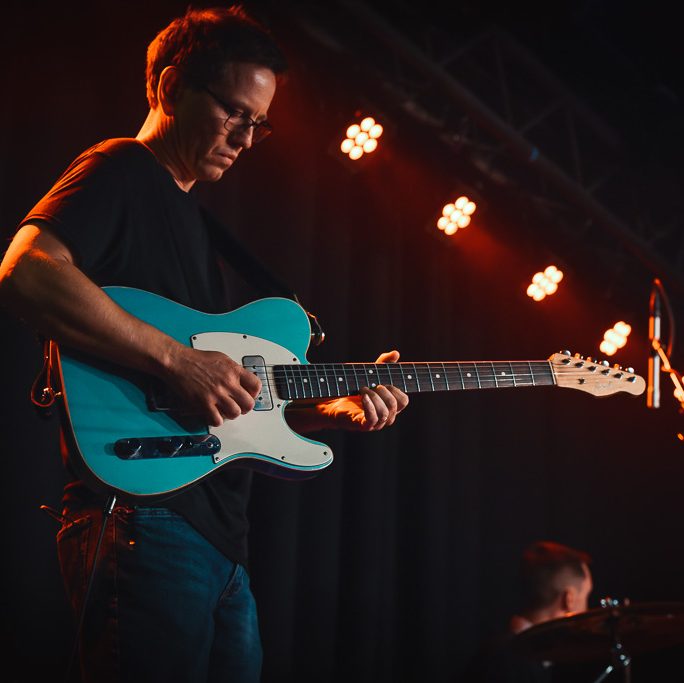
Learn from Shane Lamb
This course is taught by Shane Lamb, founder of Green Hills Guitar Studio in Nashville.
Shane’s teaching focuses on helping guitarists understand what they are playing and how to use it in real music. In this course, he breaks dominant 7 chords down into practical rhythm guitar skills: chord shapes, root locations, 1-4-5 movement, 12-bar blues structure, straight and swung rhythm, and fretboard awareness.
The goal is to help you move beyond memorizing shapes and start hearing how the chords work.
Who This Course Is For
This course is a good fit if you:
- Know basic chords and want to move into stronger intermediate rhythm guitar
- Want to understand dominant 7 chords on guitar
- Feel stuck memorizing shapes without understanding how they connect
- Want to get better at 1-4-5 progressions
- Want a clearer foundation for 12-bar blues rhythm guitar
- Need more confidence moving through barre chord shapes
- Want to understand roots on the 6th and 5th strings
- Play blues, rock, country, jazz, soul, R&B, funk, or gospel guitar
- Want your lead playing to connect more clearly to the chord progression
- Like structured video lessons with PDFs, backing tracks, and performance examples

How the Course Works
Start with the Dominant 7 Sound
Learn what dominant 7 chords sound like, how they function, and why they appear in so many styles of guitar music.
Build the 1-4-5 Map
Study how the I, IV, and V chords relate to each other in different keys.
Apply the Chords to 12-Bar Blues
Use the 12-bar blues as a practical form for hearing and practicing dominant 7 chord movement.
Work Through Five Keys
Practice in A, C, F, G, and E so the fretboard relationships become easier to recognize.
Practice Straight and Swung Feels
Develop rhythm guitar control in both straight and swung approaches.
Connect Rhythm and Lead
Use dominant 7 chord knowledge to find better lead targets, understand pentatonic phrasing, and make solos feel more connected to the changes.
Frequently Asked Questions
Build a Better Dominant 7 Chord Foundation
Dominant 7 chords are not just extra chord shapes. They are part of the harmonic language behind blues, rock, jazz, country, soul, R&B, funk, gospel, and many other guitar styles.
This course gives you a practical way to understand them through 1-4-5 progressions, 12-bar blues form, root locations, rhythm feel, and five-key practice.
If you want your rhythm guitar to feel stronger and your lead playing to connect more clearly to the chords, this course is a solid next step.