
Got to Hurry
Eric Clapton Blues Solo
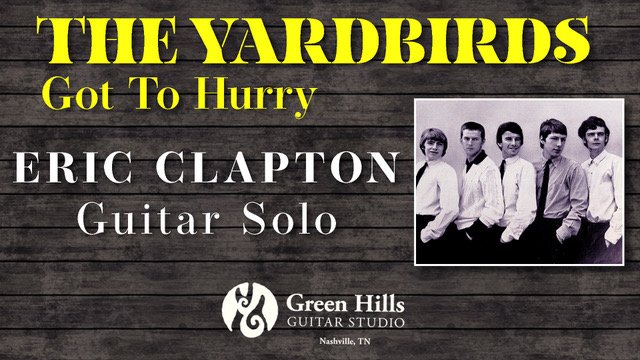
Learn Eric Clapton’s “Got to Hurry” solo chorus by chorus while studying the phrasing, pentatonic movement, chord tones, bends, and dynamics that make it work.
Learning the pentatonic scale is one thing. Knowing how to turn those patterns into a musical solo is another.
How do you know what to bend? Where do you move next? How do you build a phrase instead of simply playing notes from a scale? And how do you develop those ideas over an entire solo?
This course uses Eric Clapton’s improvised solo on The Yardbirds’ “Got to Hurry” to answer those questions. You’ll learn the complete solo, then break down how Clapton develops melodic and rhythmic ideas, moves across the fretboard, responds to the chord progression, and builds intensity over multiple choruses.
The goal is not just to memorize Clapton’s solo. It is to understand what he is doing so you can use the same ideas in your own playing.
Learn How a Blues Solo Is Actually Built
A lot of guitarists learn the five pentatonic patterns and then hit a wall. You may know the shapes, but still wonder which notes to emphasize, where to bend, how to connect one position to another, or how to make a solo sound like something more than a collection of licks.
“Got to Hurry” gives us a great way to work on those skills.
Clapton builds the solo gradually. He introduces rhythmic and melodic ideas, repeats and develops them, moves between pentatonic positions, targets notes from the underlying chords, uses bends and double stops, and changes his dynamics as the solo progresses.
Instead of looking at the fretboard one note at a time, this course shows you how those choices fit together into phrases, choruses, and a complete improvised solo.
That’s the real value of the course: learning how to turn familiar blues vocabulary into a musical idea that develops over time.
What You’ll Learn in This Course
This course teaches blues soloing and improvisation through a complete study of Eric Clapton’s solo on The Yardbirds’ “Got to Hurry.” You’ll learn the solo itself while breaking down the musical choices that make it work.
Phrasing and Repetition
See how Clapton creates short melodic and rhythmic ideas, repeats them, changes them, and uses them to give the solo a sense of direction.
Pentatonic Scales Across the Neck
Follow the A minor pentatonic scale across the fretboard and see how Clapton moves between positions without making the solo sound like a scale exercise.
Bends and Blues Vocabulary
Study where Clapton bends across the neck, which notes he targets, and how those bends become part of his phrasing.
Chord Tones
Learn how Clapton responds to the underlying blues progression by adding and emphasizing notes that connect his lines to the chords.
The Blues Note and Major 3rd
See how the flat 5 and major 3rd add color to a minor pentatonic-based solo, including where to find those notes on the fretboard.
Single Notes and Double Stops
Break down how Clapton moves between single-note phrases and double stops to vary the sound and intensity of the solo.
The V Chord and Turnaround
Study how he handles the final measures of the 12-bar progression and creates phrases that lead naturally back into the next chorus.
Dynamics and Solo Development
Hear how Clapton gradually increases the intensity through the early choruses, reaches a peak, then brings the solo back down with a more repetitive thematic approach.
Transferable Blues Improvisation Concepts
Take the phrasing, pentatonic movement, chord-tone targeting, bends, dynamics, and solo-building ideas from “Got to Hurry” and apply them to your own blues playing.
What’s Included?
Inside the course, you’ll get 6 focused lessons and 4 videos that take you through Eric Clapton’s complete “Got to Hurry” solo, with demonstrations at slow and full tempo.
You’ll receive a complete transcription of the solo in guitar tab and standard notation, along with individual PDFs that break the solo into its 12-bar sections.
The course also includes neck diagrams and heat maps showing where Clapton plays each phrase, how he moves through the pentatonic scale, and where he adds notes to target specific chords. You’ll also get a map of the complete A minor pentatonic scale across the fretboard.
Finally, you’ll get 2 custom backing tracks at different tempos with bass, drums, and rhythm guitar so you can practice the material in context.
The course is built around “Got to Hurry,” but the concepts apply much more broadly to blues improvisation. The point is to learn the solo and then understand how to take it apart and use its ideas elsewhere.

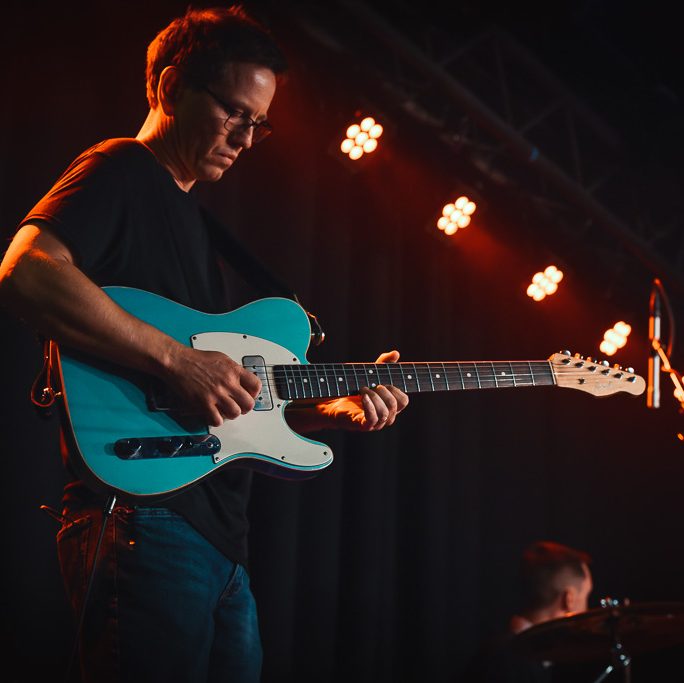
Learn from Shane Lamb
This course is taught by Shane Lamb, founder of Green Hills Guitar Studio in Nashville.
Shane’s teaching focuses on practical musicianship: understanding the fretboard, hearing how musical ideas relate to the underlying harmony, and learning how to make better choices when you play.
In this course, he uses Clapton’s “Got to Hurry” solo as a workshop in blues improvisation. You’ll learn the notes, but you’ll also study why the phrases work, how they fit the progression, and how Clapton turns basic blues vocabulary into a complete solo.
Who This Course Is For
This course is a good fit if you:
- Are a beginning or intermediate guitarist who wants to get better at blues lead guitar
- Know some pentatonic scale shapes but are not always sure what to do with them
- Want to connect the five pentatonic positions across the guitar neck
- Want to understand how blues players build phrases instead of simply playing scale patterns
- Are working on bends, double stops, chord tones, and blues vocabulary
- Want to understand when and how to use the blues note and major 3rd
- Want to make your solos follow the chord progression more closely
- Have trouble developing an idea across multiple phrases or choruses
- Want to learn how dynamics and repetition can shape a solo
- Like structured lessons with tabs, fretboard diagrams, backing tracks, and detailed musical analysis

How the Course Works
Learn the Solo Chorus by Chorus
Break the solo into manageable 12-bar sections instead of trying to learn the entire performance at once.
Study the Phrases
Look closely at the rhythmic and melodic ideas Clapton uses and how he repeats, varies, and connects them.
Map It on the Fretboard
Use the included neck diagrams and heat maps to see where the phrases sit within the pentatonic scale and how Clapton moves across the neck.
Connect the Solo to the Chords
Study the notes Clapton adds or emphasizes as the progression changes, including chord tones, the major 3rd, and the blues note.
Practice With Backing Tracks
Use the slower backing track while learning the material, then work toward playing with the full-tempo track.
Apply the Ideas to Your Own Playing
Take the phrasing, bends, scale movement, chord targeting, dynamics, and solo-building concepts out of the transcription and use them when you improvise.
Frequently Asked Questions
Learn How to Build a Better Blues Solo
The five pentatonic patterns are useful, but memorizing patterns does not automatically teach you how to improvise.
“Got to Hurry” gives you a chance to see those patterns put to work in a real performance. You’ll study how Clapton creates phrases, moves across the neck, responds to the chords, builds intensity, and turns familiar blues vocabulary into a solo with shape and direction.
Learn the solo note for note, then use it to better understand how to build solos of your own.